
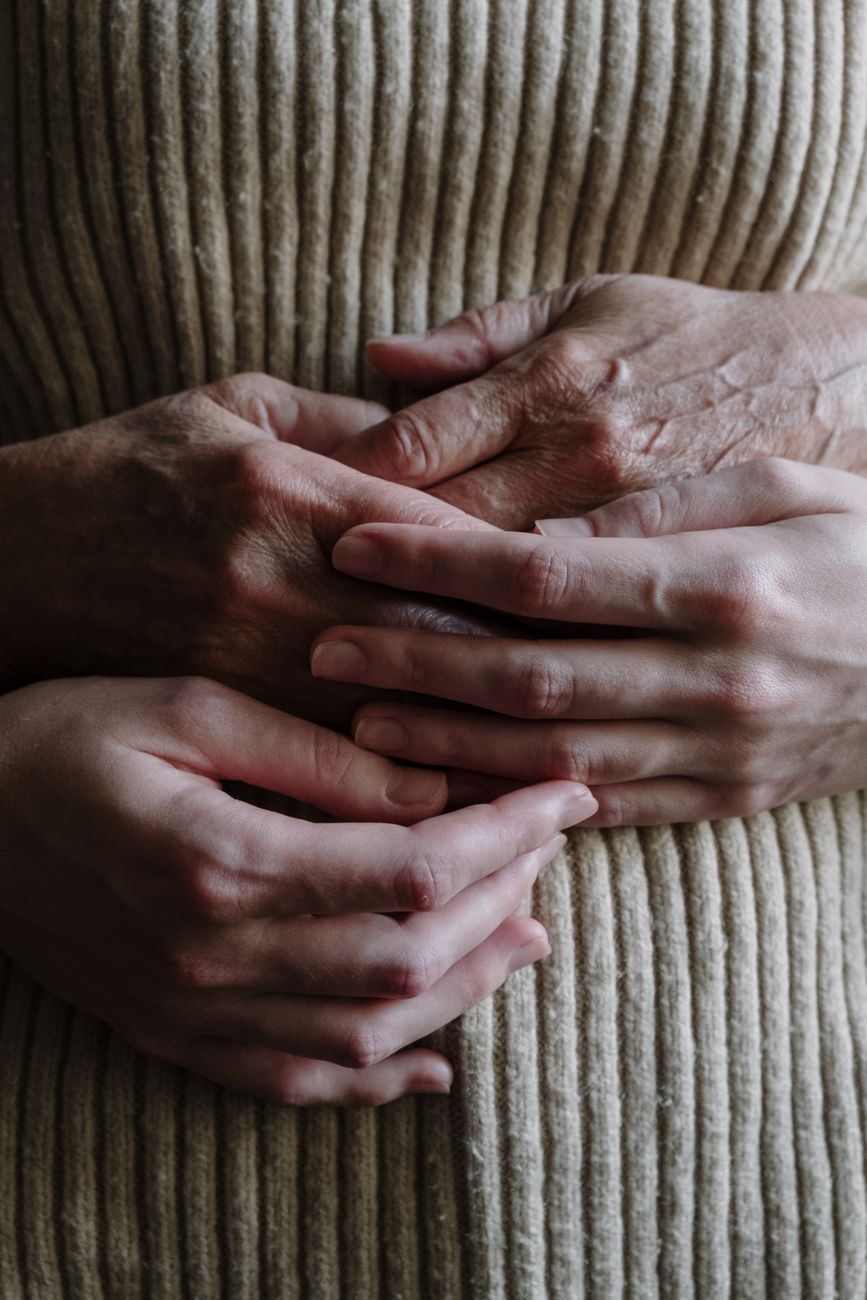
We like our caregiving stories tidy. Someone we love needs help, so we step in. We envision casseroles, meaningful conversations, and perhaps some poignant hand-holding. We discover reserves of strength we didn’t know we had, everyone becomes closer, and eventually somebody learns an important lesson about love. Cue the inspirational music.
Sometimes that really does happen. Caregiving can be one of the most intimate and meaningful experiences we ever have with another human being. It can also be funny, tender, absurd, exhausting, frightening, and occasionally downright ugly. Sometimes Mom accuses you of stealing her money shortly after you’ve wiped her ass, and nobody puts that scene in the caregiving brochure.
We don’t talk nearly enough about that version.
Not because caregivers are bad people, and not because the people receiving care are bad people. Most of the time, no villain is in sight. There are simply complicated human beings with complicated histories suddenly living under extraordinary pressure.
And pressure has a nasty habit of finding the cracks.
We Bring the Whole Relationship With Us
There is an old idea that as we age we somehow become “more ourselves.” As a gerontologist, I wouldn’t teach that as a theory of aging. Human beings keep changing throughout life, and aging doesn’t magically reveal some pure version of our personality that’s been hiding underneath.
But there is something worth considering underneath that old saying: we don’t enter old age without a history, and neither do we enter caregiving relationships without one.
If your mother has criticized your choices for 50 years, she probably isn’t going to suddenly become endlessly appreciative because you’re organizing her medications. If your husband has always expected you to remember birthdays, schedule appointments, find his missing glasses, and know what to buy at Costco, illness may not transform him into a man who cheerfully takes charge of his own care. In fact, fear and dependence may strengthen those old patterns.
And then there are siblings.
Every family seems to have its cast of characters. There is The Responsible One, The Favorite, The One Who Moved Away, The One Who Knows Everything, The One Who Never Answers the Group Text, and occasionally The One Who Lives 600 Miles Away But Has Some Very Strong Thoughts About What Everyone Else Should Be Doing.
A parent becoming ill does not magically turn these people into a high-functioning interdisciplinary care team.
Instead, we take the relationship that already existed and add illness, fatigue, fear, money, medications, incontinence, appointments, bureaucracy, sleep deprivation and changing family roles. Sometimes we add cognitive impairment. Sometimes we add the terrible realization that somebody we love may never again be quite who they were.
Of course things get messy.
Frankly, it would be astonishing if they didn’t.
Sometimes the Person You Are Caring For Isn’t Very Nice to You
This is one of the hardest things for caregivers to admit because we’re supposed to understand.
And we do understand.
We understand that dementia can cause paranoia, suspicion, agitation and personality changes. We understand that pain can make someone irritable. We understand that losing independence is frightening. Imagine having people suddenly discussing whether you can drive, what medications you should take, whether you can stay in your own home, or whether you’re still capable of managing your own money. I’d probably be cranky too.
Understanding the reason for someone’s behavior can help us respond with compassion. It doesn’t magically make the behavior painless.
There is an enormous emotional difference between reading, “People living with dementia may make false accusations,” and standing in your mother’s kitchen while she tells you that you stole her money.
Especially if you’ve spent the previous six hours arranging prescriptions, washing clothes, making lunch, paying bills, cleaning up something you’d rather not describe, and trying to keep her safe.
You may know perfectly well that this is the disease talking.
You may love her desperately.
You may also need to go sit in your car for ten minutes and say several words that do not appear in the caregiver handbook.
All of those things can be true.
We teach caregivers how to transfer someone safely. We teach medication management, fall prevention, nutrition, home safety, and the warning signs of cognitive decline. We are considerably less comfortable teaching people what to do when the person they love becomes verbally abusive, physically aggressive, suspicious, manipulative, or simply impossible to please.
Yet those moments require skills too: de-escalation, redirection, boundaries, emotional regulation, and sometimes the wisdom to stop arguing with a reality you cannot fix.
Nobody is born knowing how to do that.
And Sometimes the caregiver isn’t very nice either.
Here’s the part that makes everyone squirm a little more: exhausted caregivers aren’t always their best selves either.
They lose patience. They snap. They resent being asked the same question for the fifteenth time. They see the phone ring and don’t answer it. They become irritated by perfectly reasonable requests simply because they cannot tolerate one more person needing something from them.
They sometimes have thoughts that would look absolutely terrible embroidered on a throw pillow.
That doesn’t mean we excuse abuse or neglect. Care recipients can be extraordinarily vulnerable, and protecting them matters. But if we want to prevent caregiver neglect and abuse, we have to be willing to look honestly at what happens before someone reaches a breaking point.
Caregiving strain doesn’t stay neatly inside the caregiving relationship. It leaks.
No magical twenty-fifth hour is reserved for taking Mom to the cardiologist. Those three hours have to come from somewhere. Maybe they come from work. Maybe from your marriage. Maybe you cancel lunch with a friend, skip Pilates, miss your own doctor’s appointment, or spend another night scrolling through assisted-living websites when you should be sleeping.
Do that occasionally, and it’s life.
Do it repeatedly for months or years, and your own world begins to shrink.
This is where I become a little impatient with the way we talk about “self-care.” Yes, caregivers need to take care of themselves. But sometimes suggesting a bubble bath to an overwhelmed caregiver is a little like handing someone a scented candle while their kitchen is on fire.
They don’t need another lecture about self-care.
They need somebody to cover Tuesday.
Caregiving Is an Ecosystem
Caregiving rarely involves only two people, even when one person is doing most of the work. There is the spouse who misses the person the caregiver used to be. Adult children still need their parent while watching that parent become consumed by caring for them. There are grandchildren, siblings, jobs, doctors, pharmacies, home-health agencies, insurance companies, bills, and the bureaucratic wonderland of Medicare and Medicaid.
Everyone is affected differently.
The spouse who says, “You’re always over at your mother’s,” may sound selfish until we remember that this person has also lost something. The adult child who seems uninvolved may be overwhelmed by work, parenting, distance or a relationship with the care recipient that looks nothing like yours. The sibling who isn’t doing the hands-on work may be contributing financially. The person who provides very little may indeed be shirking responsibility, but perhaps we should find that out before we appoint ourselves family prosecutor.
Because caregiving isn’t a task list.
It’s an ecosystem.
When one part becomes overwhelmed, the strain travels through the whole system.
That is also why scorekeeping becomes so dangerous. Families start counting hours, dollars, visits, and phone calls. I did this. You only did that. I took her to three appointments. You haven’t been here in two weeks.
Sometimes those conversations are necessary. Work really does need to be distributed more fairly.
But sometimes we become so focused on whether everyone is carrying an equal load that we stop asking whether the load itself is reasonable.
Love Doesn’t Erase History
This may be the conversation families most need to have before caregiving begins.
If a relationship already contains resentment, control, estrangement, dependency, poor communication, or unresolved conflict, caregiving doesn’t necessarily heal it. Sometimes it amplifies it.
A daughter may suddenly find herself providing intimate personal care for the mother who never made her feel good enough. A husband may become responsible for bathing a wife he has been emotionally distant from for years. An adult child may be expected to sacrifice work, money, and family time for a parent who was largely absent during childhood.
Then someone says, “But she’s your mother.”
Yes.
And 50 years are attached to that sentence.
“In sickness and in health” also doesn’t magically erase everything that happened during the healthy years. Marriage can contain enormous love and still contain resentment, old wounds, and patterns that become much harder to navigate when one person becomes dependent on the other.
We need to make room for complicated love.
You can love someone and resent what caring for them is doing to your life. You can feel compassion and still be exhausted. You can understand why someone is behaving badly and still be hurt by it. You can willingly provide care and occasionally wish you didn’t have to.
Those feelings don’t cancel one another out.
They make you human.
We Need a Plan Before We Need the Plan
Most families wait far too long to talk about caregiving.
We wait until Dad has fallen, Mom is wandering, somebody can’t drive anymore, the hospital is discharging someone tomorrow morning or a family member suddenly needs help using the toilet. Then everyone gathers around a kitchen table or starts a frantic group text and tries to create a long-term care plan while terrified and sleep-deprived.
This is not optimal strategic planning.
We need to have these conversations while they are still hypothetical enough to be uncomfortable rather than catastrophic.
And “I never want to go to a nursing home” is not a plan.
Neither is “My daughter will take care of me.”
Has anyone asked the daughter?
A real plan asks much less romantic questions. Who is actually available? What kinds of care are family members willing to provide? Who can help with money? Who can make medical decisions? What happens when siblings disagree? What happens if the person receiving care refuses help? How will financial transactions be documented so that nobody is later accused of stealing? Who is the backup caregiver, and what happens if the primary caregiver gets sick?
We also need to ask a question families avoid until circumstances force it upon them: What would make caring for this person at home unsafe or unsustainable?
That doesn’t mean we’re planning to institutionalize Grandma.
It means we’re acknowledging that love is not an unlimited resource capable of replacing staffing, medical expertise, physical strength, sleep and money.
Sometimes providing excellent care means recognizing that you cannot personally provide all of it.
One Person’s Vulnerability Doesn’t Negate Another’s
Older adults and people living with disabilities can be profoundly vulnerable to abuse, neglect, exploitation, and loss of autonomy. Protecting them is essential.
But caregiving creates vulnerability in more than one direction.
A caregiver can become financially exposed, physically injured, socially isolated and emotionally depleted. Someone who began by stopping by Mom’s twice a week can gradually become responsible for groceries, medications, transportation, banking, housework, personal care, and nighttime emergencies without anyone ever sitting down and saying, This is now your job.
It just creeps.
That’s one of the things we don’t acknowledge enough about family caregiving. There often isn’t a moment when somebody formally agrees to become “the caregiver.” There are just little additions.
Can you pick up my prescription?
Can you drive me Tuesday?
Can you call the insurance company?
Can you help me shower?
Can you stay tonight?
Eventually one person looks around and realizes that everyone else’s life still seems to be moving forward while theirs has quietly reorganized itself around another human being.
This is why good caregiving needs safeguards for everybody: respite, backup plans, financial transparency, documentation, shared decision-making when possible, professional help when necessary, and honest conversations about what one person can reasonably provide.
At some point, “We’re family” stops being a care plan.
The Caregiver Can Disappear
Another form of neglect is one we don’t talk about nearly enough, perhaps because it happens so quietly.
The caregiver can begin neglecting themselves.
It rarely starts dramatically. You reschedule your dental appointment because Mom has one that day. You stop going to the gym because somebody needs supervision. You haven’t seen your friends lately, but you’ll catch up when things settle down. Your spouse stops suggesting weekend trips because the logistics are impossible. You don’t refill your own prescription because you’ve spent the afternoon trying to straighten out someone else’s.
One compromise makes sense.
Then another one does.
Eventually everybody’s needs are represented on the calendar except yours.
There is something almost culturally virtuous about this kind of self-erasure, particularly for women. We praise devotion. We admire sacrifice. We describe someone as an “amazing daughter” because she gave up enormous portions of her own life.
Maybe she is an amazing daughter.
But I don’t think destroying yourself should be the metric.
You do not prove how much you love someone by becoming collateral damage.
And it isn’t particularly good for the person receiving care either. A caregiver who is physically exhausted, socially isolated, and simmering with resentment is not a sustainable care system.
Sometimes Good Enough Really Is Good Enough
Families living through long-term caregiving make hundreds of imperfect decisions, usually with incomplete information and limited resources. A beautiful solution isn’t always waiting behind Door Number Three.
Maybe someone remains at home with cameras, medication dispensers, neighbors checking in, and family members rotating through. Maybe an adult day program buys everyone six hours of breathing room. Maybe someone moves in. Maybe someone moves out. Maybe paid caregivers become necessary. Maybe residential care becomes the safest choice.
Sometimes the whole thing is held together with duct tape, shared calendars, benefits programs, frozen lasagna, and whoever can cover Tuesday afternoon.
That’s not failure.
That’s caregiving.
The useful question often isn’t, What is the perfect thing to do? It is: What is the safest, kindest, and most sustainable thing we can realistically do right now?
Then we ask again when circumstances change.
Because they will.
The answer that worked beautifully in March may be completely inadequate by October. Dementia progresses. Bodies change. Caregivers age too. Money runs out. People move. Families fight. People reconcile. Somebody gets pneumonia. Somebody finally agrees to accept help.
A care plan should be allowed to change because people do.
Maybe the Goal Isn’t Martyrdom
Caregiving is not a test of how much you love someone.
I think we get ourselves into terrible trouble when we treat it that way. If love is measured by sacrifice, there is always one more thing you could give up. One more hour. One more trip. One more piece of your own life.
There is no finish line where somebody hands you a trophy and says, Congratulations. You gave enough.
Good caregiving requires love, but it also requires people, time, skill, money, boundaries, flexibility and planning. It requires forgiveness, sometimes of the person receiving care, sometimes of our families and very often of ourselves.
It also requires us to recognize something that can feel almost disloyal to say aloud: sometimes love isn’t enough to make an arrangement work.
There may come a day when the most loving thing one person can say to another is, “I love you, and this isn’t working anymore. We need another plan.”
That isn’t abandonment.
It isn’t selfishness.
And it doesn’t erase everything you’ve already done.
It may simply mean that you have finally stopped measuring love by how much suffering everyone can tolerate.
Perhaps that’s not really the dark side of caregiving after all. Maybe the darkness comes from pretending this side doesn’t exist.
Caregiving can be beautiful. It can deepen relationships, reveal extraordinary tenderness and give us moments with people we love that we will treasure for the rest of our lives. It can also make us angry, tired, resentful, frightened, and occasionally desperate to run away from people we would simultaneously walk through fire to protect.
I think we can love people enough to tell the truth about both.
Maybe that’s what it looks like when we finally turn on the light.






Leave a Reply